Fresh flowers can make a living room feel warmer, brighter, and more inviting without changing any of the furniture or buying new decorations. A simple vase of tulips on a coffee table, a few seasonal stems on a sideboard, or a loose arrangement of garden flowers beside a window can make the entire space feel more considered.
The secret is not to fill every empty surface with flowers. Instead, choose the right arrangements for your room, think about colour and proportion, and place each vase where it adds something to the space.
Fresh flowers can suit almost any interior style, from a modern living room with neutral furniture to a cosy cottage-inspired space filled with natural textures. You can also create beautiful displays on a small budget by using supermarket bouquets, flowers from your garden, or a few carefully selected stems.
In this guide, we explore how to style fresh flowers in a living room, where to place them, which arrangements work best for different interiors, and how to keep your flowers looking beautiful for longer.
1. Choose the Best Places for Fresh Flowers
Before choosing flowers, look around your living room and identify the surfaces that could benefit from a little colour or texture.
You do not need flowers in every corner. One well-positioned arrangement can have more impact than several small vases scattered around without a clear purpose.
Coffee Table
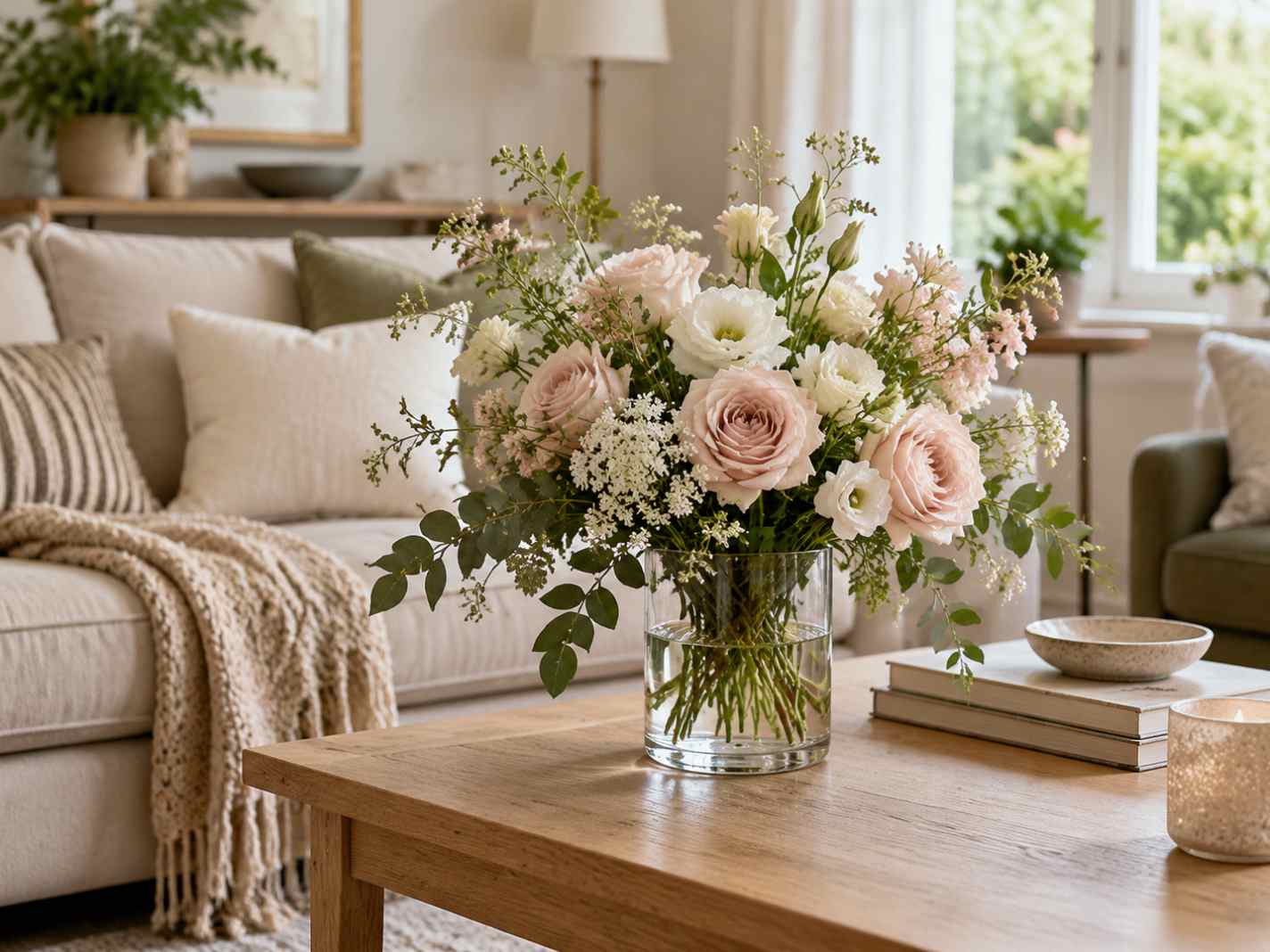
A coffee table is one of the most natural places to display fresh flowers.
A low or medium-height arrangement can create a focal point without making the table difficult to use. Choose a compact bouquet if you regularly use the surface for drinks, books, or snacks.
Rounded ceramic vases, clear glass vessels, and small seasonal arrangements can all work well.
For a relaxed look, combine a few flowers with a book or a small decorative tray. Leave enough empty space for the table to remain practical.
If your coffee table is particularly small, a single statement flower in a bud vase may be all you need.
Sideboard or Console Table
A sideboard provides more room for a taller or fuller arrangement.
This is a good place to display flowers that you want people to notice when they enter the living room. Tall roses, seasonal branches, lilies, or a mixed bouquet can create a striking feature.
Consider the height of any artwork or mirror above the furniture. The flowers should complement the objects behind them rather than obscure them.
A tall vase can look especially attractive on a long sideboard, but a compact arrangement may be more appropriate if the furniture is narrow.
Window Sill
A window sill can be a lovely place for small flower arrangements, particularly if you enjoy seeing flowers in natural daylight.
Small glass vases or ceramic bud vases work well here because they take up little space.
However, direct sunlight can shorten the life of some cut flowers, while heat from radiators beneath windows may cause them to wilt more quickly.
Choose a position with suitable light and temperature rather than placing flowers directly in the strongest sunlight.
Shelves and Bookcases
Flowers can soften the straight lines of shelving and make a living room feel less rigid.
A small vase placed among books, framed photographs, and decorative objects introduces a natural element that contrasts with the hard surfaces around it.
Choose compact arrangements rather than large bouquets that dominate the shelf.
For a more balanced display, leave some shelves relatively empty and use flowers on just one or two levels. This helps the arrangement stand out without making the bookcase look overcrowded.
2. Match Your Flowers to Your Living Room Style
Flowers should complement the room rather than compete with its existing colours, furniture, and decorative details.
You do not need to match every flower to your cushions or curtains. Instead, choose a colour palette and arrangement style that feels comfortable within the overall space.
For a Neutral Living Room
If your living room features cream walls, beige sofas, light wood, or soft grey furnishings, flowers can introduce colour without overwhelming the calm atmosphere.
White tulips, pale pink roses, cream carnations, and delicate cosmos are all worth considering.
Alternatively, choose a stronger accent colour. A vase of deep pink flowers can create a focal point in a room dominated by neutral shades.
Ceramic vases in ivory, sand, or muted green can reinforce the natural look, while clear glass keeps the display light and understated.
For a Modern Living Room
Modern interiors often benefit from simple arrangements with clean lines.
Consider a single variety of flower, such as white lilies, yellow tulips, or a small collection of long-stemmed roses.
A sculptural vase can also become part of the display. In this case, you may need only a few stems because the shape of the container already provides visual interest.
Avoid making every arrangement excessively symmetrical. A little variation in stem height can make the flowers feel more natural while maintaining a clean appearance.
For a Cottage-Inspired Living Room
If your living room has wooden furniture, linen textiles, vintage accessories, or soft floral patterns, informal arrangements can be particularly attractive.
Garden roses, sweet peas, cosmos, daisies, and seasonal foliage can create a relaxed, freshly gathered appearance.
Choose a rounded ceramic vase or a simple glass container and allow the stems to spread naturally.
The goal is not to make the arrangement look perfectly controlled. Slight variations in height and shape can contribute to the charm.
For a Dark or Colourful Living Room
If your living room features darker walls, rich upholstery, or bold decorative colours, flowers can either complement the existing palette or provide contrast.
Deep red roses, purple flowers, orange dahlias, and warm-toned seasonal blooms can work well in rooms with darker furnishings.
Alternatively, a simple arrangement of white flowers can stand out beautifully against a dark background.
Pay attention to the vase as well. A dark ceramic container may blend into the furniture, while a clear glass vase can create a lighter visual effect.
3. Choose Flowers That Suit the Season
Seasonal flowers are a practical way to keep your living room looking fresh without repeating the same arrangement throughout the year.
They also give you an opportunity to experiment with different colours and textures as the seasons change.
Spring
Spring flowers often bring soft colours and a fresh, light appearance.
Tulips, daffodils, hyacinths, and other seasonal blooms can brighten a living room after the darker winter months.
A small vase of tulips on a coffee table is an easy way to introduce seasonal colour without changing your wider decor.
Keep in mind that some flowers have different care requirements. For example, daffodils release sap that can affect other cut flowers, so they are best conditioned separately before being combined with other varieties.
Summer
Summer is ideal for relaxed, colourful arrangements.
Garden roses, cosmos, zinnias, sunflowers, and sweet peas can all provide attractive options, depending on your local climate and availability.
If you grow flowers at home, this is a good opportunity to bring your garden indoors.
Mix different flower shapes rather than relying on colour alone. Large focal blooms, smaller supporting flowers, and a little greenery can create a more natural-looking arrangement.
Autumn
Autumn flowers can introduce richer colours and a sense of warmth.
Consider orange dahlias, rust-coloured chrysanthemums, burgundy flowers, and seasonal foliage.
These arrangements work particularly well with wooden furniture, warm lighting, textured cushions, and natural fabrics.
A smaller arrangement in a brown, cream, or muted green ceramic vase can complement autumn decor without making the room feel overly themed.
Winter
During winter, flowers can add brightness to a living room that receives less natural light.
White flowers, deep red blooms, seasonal branches, and simple greenery can all work well.
A compact arrangement on a sideboard or dining table may be more practical than a large bouquet if the room is already decorated with seasonal accessories.
Choose flowers that tolerate your indoor conditions, and keep them away from radiators, fireplaces, and other sources of excessive heat.
4. Get the Scale Right
One of the most common mistakes when styling flowers is choosing an arrangement that is too large or too small for the furniture around it.
A huge bouquet on a narrow coffee table can feel awkward, while a tiny vase on a long sideboard may disappear visually.
Think about the size of the surface, the height of nearby furniture, and how much attention you want the flowers to attract.
Small Tables
Choose compact arrangements or individual stems.
A small vase of tulips or a few seasonal flowers can add colour without taking up too much room.
Large Coffee Tables
A medium-sized arrangement can provide a focal point, particularly when the table has a broad surface.
However, keep the overall height low enough to maintain comfortable sightlines across the seating area.
Long Sideboards
A fuller bouquet or taller arrangement can help balance a long piece of furniture.
You can also use two smaller arrangements placed apart from each other, although they should relate in colour or style to avoid looking disconnected.
Narrow Shelves
Choose small bud vases or compact containers.
Avoid arrangements that spread too far beyond the edge of the shelf or make the display feel unstable.
As a general principle, the flowers and vase should look proportionate to the furniture rather than competing with it.
5. Use the Right Vase for a Better Display
The vase is part of the decoration, so it deserves as much consideration as the flowers themselves.
Even an inexpensive bouquet can look more attractive when placed in a container that suits its shape and colour.
Clear Glass Vases
Clear glass is a versatile choice because it works with many different flowers and interior styles.
It is particularly suitable for tulips, roses, and simple seasonal bouquets.
A transparent vase keeps the overall display visually light, making it useful for smaller living rooms where heavy decorative objects can make the space feel crowded.
Keep the glass clean and change the water regularly so the arrangement remains fresh-looking.
Ceramic Vases
Ceramic vases add texture and can help create a more finished decorative display.
Cream, beige, white, and muted green finishes work particularly well with neutral interiors and natural materials.
A rounded ceramic vase can complement an informal bouquet, while a tall, narrow vessel may be better suited to a few long-stemmed flowers.
Because ceramic vases often conceal the stems and water, they can also create a tidier appearance.
Bud Vases
Bud vases are ideal when you have only a few flowers available.
Rather than trying to make a small number of stems look like a full bouquet, display them individually in compact containers.
You could place one bud vase on a side table and another on a bookshelf, creating a consistent look throughout the room without using many flowers.
Textured or Sculptural Vases
If your living room has relatively simple furnishings, a vase with an unusual shape or textured finish can introduce additional visual interest.
In this case, keep the flowers relatively simple so that the container remains part of the overall design.
You do not need an expensive decorative vase. Look for a shape, finish, and size that suit the room and can be used with different arrangements.
6. Create a Beautiful Coffee Table Arrangement
A coffee table arrangement should be attractive but practical.
Because this is often one of the most frequently used surfaces in the living room, the flowers should not prevent you from using the table comfortably.
Start by choosing a low or medium-height vase with a stable base.
Next, select flowers that suit the size of the container. A small bunch of tulips, a few roses, or a loose seasonal arrangement can all work well.
Trim the stems to different lengths if you want a more natural silhouette, and remove any leaves that would sit below the waterline.
Once the flowers are arranged, consider the surrounding objects.
A simple tray, a book, or a small decorative item can complement the display, but avoid filling every available space. The flowers should remain the main feature.
If you regularly entertain guests, choose an arrangement that does not obstruct conversation or occupy too much of the table.
For particularly small coffee tables, a single flower in a bud vase can provide the same sense of freshness with less clutter.
7. Style Flowers on a Sideboard or Console
A sideboard gives you more freedom to create a decorative arrangement because it is less likely to be used for everyday activities than a coffee table.
This makes it a good location for taller flowers, fuller bouquets, or arrangements with more noticeable shapes.
Start by considering the furniture behind the vase.
If the sideboard sits beneath a mirror, the reflection can make the flowers more prominent. A framed artwork can also provide a backdrop, but avoid positioning the arrangement where it hides important parts of the picture.
For a balanced display, you can combine a vase of flowers with a small stack of books or a decorative object. Keep the grouping relatively simple so the surface does not look overcrowded.
If the sideboard is long, leave some empty space around the arrangement. This gives the flowers room to stand out and makes the overall display feel more intentional.
A taller vase with a stable base is particularly useful if you want to display long stems or flowers with heavy heads.
8. Use Flowers to Add Colour Without Changing Your Decor
Fresh flowers are an easy way to experiment with colour because they can be replaced whenever you want a different look.
You do not need to buy new cushions, curtains, or accessories to refresh your living room for a season or special occasion.
If your room is mostly neutral, choose flowers that introduce one accent colour.
For example, pink tulips can bring a soft touch of colour to a cream living room, while yellow flowers can brighten a space with grey furnishings.
If your living room already has several strong colours, choose flowers that complement one of them rather than introducing too many additional shades.
You can also use the vase to help connect the arrangement to the room.
A green ceramic vase may echo the colour of indoor plants, while a cream vessel can complement neutral upholstery.
The aim is not to make everything match perfectly. A little contrast often makes a display more interesting.
9. Make Supermarket Flowers Look More Expensive
You do not need a florist’s budget to create an attractive living room arrangement.
A few simple adjustments can make an ordinary supermarket bouquet look more considered.
Remove the Packaging
Take off the plastic wrapping and any decorative ties before arranging the flowers.
This allows you to see the natural shape of the bouquet and decide how you want to display it.
Trim the Stems
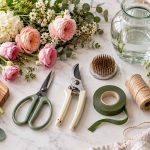
Use clean, sharp scissors or secateurs to trim the stems to a suitable length.
Remove leaves that would sit below the waterline, and place the flowers in a clean vase with fresh water.
Separate the Flowers by Type
A mixed supermarket bouquet can sometimes look crowded when placed directly into a vase.
Try separating the flowers into groups. Use the larger blooms as focal points, add smaller flowers around them, and use greenery where appropriate.
You may even be able to create two smaller arrangements from one bouquet.
Adjust the Flower Heights
Avoid cutting every stem to exactly the same length unless you want a very structured look.
A little variation can create a more natural silhouette, particularly with garden-style arrangements.
Choose a Suitable Vase
A vase that is too wide can make a small bouquet look sparse, while a narrow opening may crowd the stems.
Try different containers until you find one that supports the flowers without making them look compressed.
These small changes can make a noticeable difference without requiring extra spending.
10. How Many Flower Arrangements Does a Living Room Need?
There is no fixed number of arrangements that works for every living room.
The right amount depends on the size of the space, the furniture layout, and how much decoration you prefer.
For a small living room, one arrangement on a coffee table or sideboard may be enough.
In a larger room, you could use two arrangements in different areas, such as a fuller bouquet on the sideboard and a smaller vase on a side table.
If you already have several houseplants, decorative objects, or patterned furnishings, fewer flower arrangements may create a more balanced result.
Think of flowers as part of the overall room design rather than separate decorations that need to occupy every surface.
A useful starting point is to choose one main arrangement and add a second only if another area genuinely feels as though it would benefit from flowers.
11. Keep Your Living Room Flowers Fresh for Longer
Beautiful styling begins with flowers that are well cared for.
Fresh flowers can last for different lengths of time depending on the variety, their condition when purchased, and the temperature of your home.
A few simple habits can help extend their display life.
Use a clean vase. Wash the container before adding flowers to reduce the build-up of bacteria.
Trim the stems. Use clean, sharp tools to remove a small section from the bottom of each stem.
Remove submerged leaves. Leaves left underwater can decay and affect water quality.
Change the water regularly. Replace dirty water and clean the vase as needed.
Keep flowers away from heat. Avoid placing arrangements directly beside radiators, fireplaces, or other warm areas.
Choose a suitable location. Many cut flowers last longer in a cool spot away from intense sunlight.
Follow flower-specific advice. Different varieties have different needs, so check care guidance when available.
If you have pets, also check whether the flowers you bring into your home are safe for them. True lilies are especially dangerous to cats, and some other popular flowers can also be harmful to animals.
Common Mistakes to Avoid When Styling Living Room Flowers
A few small mistakes can make an arrangement less effective than it could be.
Choosing flowers that are too large for the table. A huge bouquet may overwhelm a small coffee table or block views across the room.
Using a vase with the wrong proportions. The vase should provide enough support without hiding the flowers or making the arrangement unstable.
Placing flowers in direct heat. Warm locations can cause many cut flowers to wilt more quickly.
Adding too many decorative objects. Flowers need space to stand out, so avoid overcrowding the surrounding surface.
Mixing too many colours. A limited colour palette can make the arrangement feel more coordinated.
Ignoring the room’s existing style. Consider the furniture, materials, and colours already present before choosing a vase and flowers.
Forgetting about everyday use. Make sure arrangements do not interfere with drinks, books, walkways, or comfortable conversation.
Final Thoughts
Styling fresh flowers in a living room is one of the simplest ways to make your home feel more welcoming.
Start by choosing a suitable location, such as a coffee table, sideboard, or bookshelf. Then match the flower arrangement to the size of the furniture, the style of the room, and the colours you already have.
Tulips and roses work well for everyday displays, while cosmos, sweet peas, and seasonal garden flowers can create a more relaxed appearance. Clear glass vases offer versatility, while ceramic and textured vessels add warmth and character.
You do not need expensive bouquets or elaborate arrangements. A few well-chosen stems in the right vase can make a noticeable difference, especially when the display is kept fresh and the surrounding space remains uncluttered.
Start with one arrangement in a place where you will enjoy seeing it every day. Once you find a style you like, you can experiment with seasonal colours, different flowers, and smaller displays throughout your home.
The best living room flower arrangement is one that complements your space, fits your routine, and brings you a little pleasure whenever you walk into the room.
Cut repetition and tighten the articleAdd a quick styling checklist