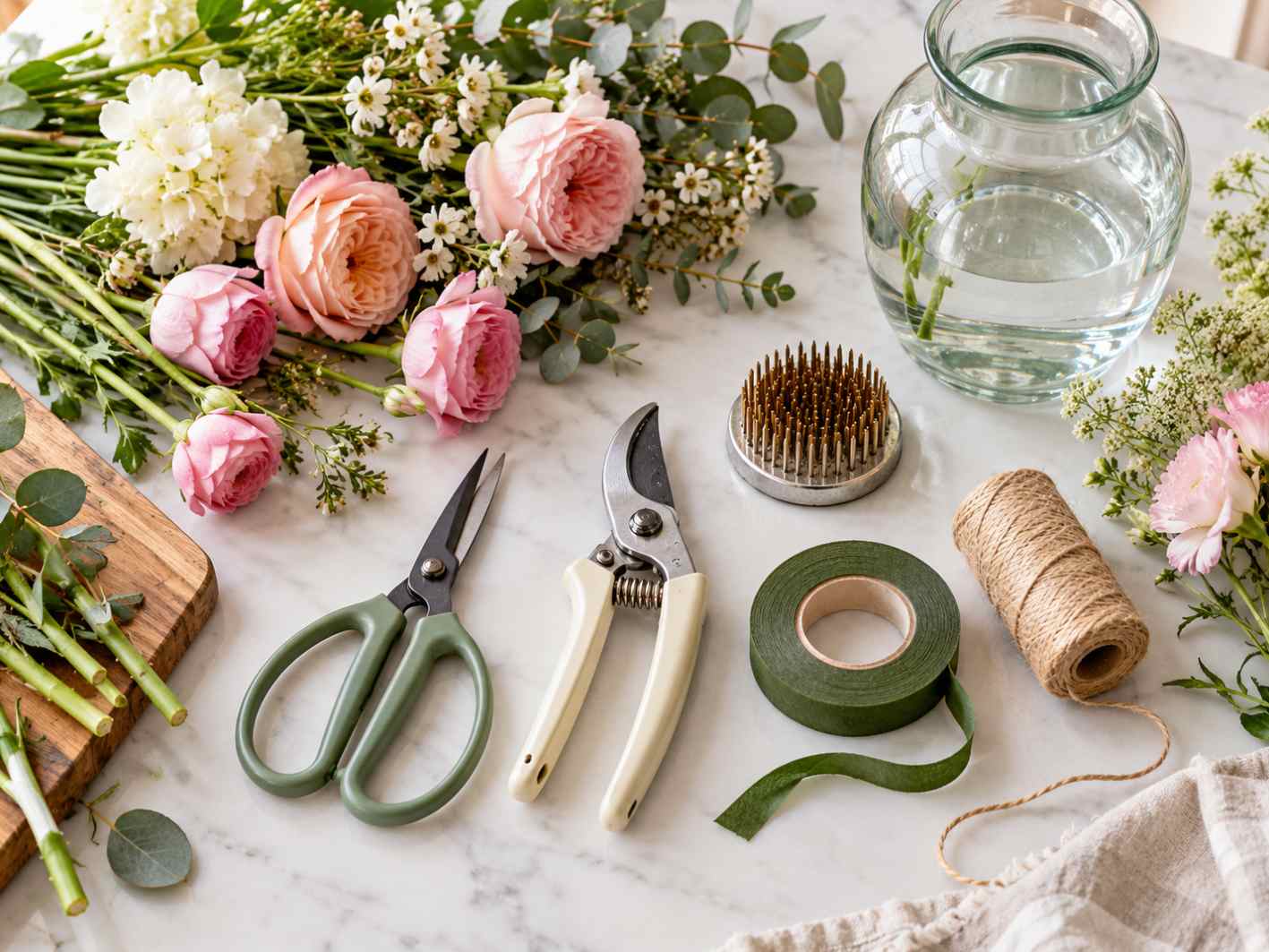
Arranging fresh flowers at home can be a relaxing way to bring colour and personality into your living space. Whether you are creating a small bouquet for your kitchen table or putting together a centrepiece for a special occasion, having the right tools makes the process much easier.
The good news is that you do not need a professional florist’s entire toolkit to get started. A few reliable essentials can help you prepare stems, position flowers, and create attractive arrangements without spending a fortune.
If you are new to flower arranging, it can be tempting to buy specialist scissors, elaborate floral mechanics, decorative accessories, and complete tool kits. However, many of these items are unnecessary when you are working with simple bouquets at home.
This guide covers the best flower arranging tools for beginners, explains what each one does, and helps you decide which items are worth buying first.
1. Floral Scissors: The Most Important Tool
If you buy only one dedicated flower-arranging tool, start with a good pair of floral scissors.
Fresh flowers need cleanly cut stems so they can take up water effectively. Sharp scissors designed for floral work make it easier to prepare ordinary flower stems without crushing them unnecessarily.
When choosing floral scissors, look for the following features:
- Sharp blades: Clean cuts help avoid unnecessary damage to the stems.
- Comfortable handles: A comfortable grip is useful when preparing a large bouquet.
- Easy cleaning: Smooth surfaces and a straightforward design make maintenance easier.
- Suitable blade size: Choose scissors that can handle the types of flowers you normally buy.
You do not need the most expensive pair available. A reliable, comfortable tool is more useful than a premium model with features you will rarely use.
For very thick or woody stems, ordinary floral scissors may not be suitable. In those cases, use secateurs designed for the job.
It is also important to keep your cutting tools clean. Wipe away plant residue after use and follow the manufacturer’s cleaning instructions.
Worth buying first? Absolutely. A good pair of floral scissors is one of the most useful tools for anyone who regularly arranges fresh flowers.
2. Garden Secateurs for Thicker Stems
Although floral scissors are suitable for many common flowers, some stems are too thick or woody for them to cut comfortably.
Garden secateurs are designed to handle firmer plant material and can be useful when working with woody branches, thicker flower stems, and certain types of foliage.
For example, if you enjoy incorporating branches or sturdy greenery into an arrangement, secateurs can make preparation easier.
When choosing a pair, consider:
- A comfortable handle that fits your hand.
- A sharp blade suitable for the stem thickness.
- A locking mechanism for safe storage.
- A design that is easy to clean and maintain.
You do not necessarily need secateurs if you mainly arrange supermarket bouquets containing roses, tulips, carnations, and other soft-stemmed flowers.
However, they become more useful if your flower arranging also involves garden-grown blooms, woody stems, or decorative branches.
Always use cutting tools according to their intended purpose, and keep the blades safely closed when they are not in use.
Worth buying first? Buy them when your arrangements regularly include stems that floral scissors cannot cut cleanly. Otherwise, they can wait.
3. A Suitable Vase Collection
A vase is more than a decorative container. Its shape and opening can influence how easily you arrange flowers and how the finished bouquet looks.
You do not need a large collection to begin. Two or three versatile vases are often enough for most household arrangements.
A Tall, Narrow Vase
A tall vase with a relatively narrow opening is useful for long-stemmed flowers such as tulips and roses. The narrow neck helps support the stems and keeps the arrangement together.
This type of vase is particularly practical when you want a quick, simple display without additional flower-arranging equipment.
A Medium-Sized Glass Vase
A clear glass vase is one of the most versatile options for beginners. It works with many flower varieties and allows you to see the stems and water.
Choose a shape that provides enough space for the bouquet without allowing every stem to fall towards the outside.
A Short Ceramic Vase
A short ceramic vase is ideal for compact arrangements on coffee tables, bedside tables, and kitchen counters.
Neutral colours such as white, cream, and beige are easy to coordinate with different flower colours and home interiors.
When shopping for vases, prioritise useful shapes over decorative variety. A few well-chosen containers will serve you better than a cupboard full of vases that rarely suit your flowers.
Worth buying first? Yes. Start with one medium-sized vase and add other shapes as your flower-arranging preferences develop.
4. A Flower Frog for Better Stem Support
A flower frog is a device that holds flower stems in position inside a vase or bowl. It is particularly useful when you want more control over the placement of individual stems.
Unlike wet floral foam, a flower frog does not normally absorb water. Instead, it supports the flowers while their cut ends remain submerged in the water inside the container.
There are several types to consider.
Pin frogs: These have a base covered with short pins that help hold stems at different angles. They are useful for natural-looking arrangements and shallow containers.
Hole-style frogs: These have openings that guide stems into position and can help create a more organised arrangement.
Glass or ceramic frogs: These can be attractive choices for traditional vases and vintage-inspired floral displays.
A flower frog is particularly useful if you prefer loose, asymmetrical arrangements rather than tightly packed bouquets.
However, not every vase needs one. A narrow-neck container may already provide enough support for your flowers.
If you decide to buy a flower frog, check its dimensions and make sure it fits securely inside your chosen container.
Worth buying first? It is a useful optional tool, especially if you regularly arrange flowers in wide vases or shallow bowls.
5. Floral Tape for Creating a Simple Grid
Floral tape can help keep stems in position when you are working with a vase that has a wide opening.
By applying strips of suitable waterproof floral tape across the opening, you can create a grid that divides the space into smaller sections. Each opening provides a place for a flower stem.
This technique can make it easier to distribute flowers evenly and prevent them from falling towards the sides of the vase.
To create a simple grid:
- Clean the vase and add fresh water.
- Apply several strips of floral tape across the opening.
- Add another set of strips in the opposite direction.
- Insert the flowers through the openings.
- Adjust the stems until the arrangement looks balanced.
Use tape that is appropriate for floral arranging and can withstand contact with water.
Floral tape is inexpensive and easy to store, but it is generally disposable. If you arrange flowers frequently, a reusable flower frog may be more suitable over time.
You may not need either option if your vase naturally supports the stems.
Worth buying first? Not essential, but it is a useful low-cost option for wide-mouth vases.
6. A Small Watering Jug
Keeping flowers hydrated is a basic part of flower care, but pouring water into a narrow vase can sometimes be awkward.
A small watering jug with a narrow spout makes it easier to refill containers without spilling water over the table.
You can also use it when changing the water or preparing several vases at once.
Look for a lightweight design that is easy to control. A small household watering jug is usually sufficient; you do not need specialist floristry equipment.
If you already own a small jug or measuring container that pours neatly, there is no reason to buy another one.
Worth buying first? Optional. It is convenient, but an existing household jug can do the job just as well.
7. A Clean Bucket for Preparing Flowers
A bucket can be surprisingly useful if you regularly buy large bouquets or cut flowers from your garden.
After trimming the stems, you can place the flowers in water while you prepare the vase and plan the arrangement.
A bucket also provides space to keep longer stems upright before arranging them.
Choose a clean, sturdy container that is tall enough to support the flowers without crushing their heads. It should also be easy to wash between uses.
A dedicated flower bucket is not necessary for everyone. A clean household container can work perfectly well, provided it has not been used to store chemicals or other unsuitable substances.
If you buy only a few stems at a time, a vase filled with fresh water may be all you need.
Worth buying first? Useful for larger bouquets and garden flowers, but not a priority for occasional flower arranging.
8. Flower Food to Help Maintain Freshness
Flower food is not a cutting tool, but it is a useful item to keep alongside your basic flower-arranging supplies.
Commercial cut-flower food is formulated to support vase life. Depending on the product, it may provide nutrients, help manage water acidity, and limit the growth of certain microorganisms.
Many supermarket bouquets and florist arrangements include a small sachet.
To use it correctly, dissolve the recommended amount in the stated volume of water. Adding more than instructed does not necessarily improve the results.
If you do not have flower food, you can still care for your bouquet effectively by using a clean vase, fresh water, and properly prepared stems.
Avoid adding random household ingredients or mixing cleaning chemicals into the vase. Improvised mixtures may damage flowers or create unnecessary risks.
Worth buying first? It is useful when you regularly purchase fresh flowers, but it does not replace good vase hygiene and routine water changes.
9. Floral Wire and Twine for Extra Support
Floral wire and twine can help with specific arranging tasks, although neither is essential for most beginner bouquets.
Floral wire is sometimes used to support delicate stems, reinforce certain flower heads, or help shape particular designs. Its suitability depends on the flower and the intended arrangement.
Twine is useful for securing hand-tied bouquets before placing them in a vase or wrapping them as gifts.
For everyday arrangements, you may not need either item. Many flowers can stand naturally in a suitable vase without being tied or wired.
If you decide to use floral wire, choose an appropriate type and handle it carefully to avoid damaging the stems or creating sharp exposed ends.
Worth buying first? No. These items are better suited to specific projects once you have more experience.
10. A Simple Cleaning Brush and Cloth
Clean equipment helps make flower arranging easier and supports better flower care.
A small cleaning brush can help remove residue from narrow vases, while a soft cloth is useful for wiping the outside of containers and cleaning up water spills.
After each arrangement, wash the vase with warm water and washing-up liquid, rinse it thoroughly, and allow it to dry.
Clean your scissors and secateurs according to their care instructions, paying particular attention to plant residue around the blades.
If you use a reusable flower frog, clean it after each arrangement as well.
You do not need a dedicated professional cleaning kit. Ordinary household cleaning supplies are usually sufficient.
Worth buying first? You probably already own everything you need. Use your existing cleaning supplies rather than buying specialist products unnecessarily.
The Best Flower Arranging Tools for Beginners: Comparison Table
Here is a quick overview to help you decide what to buy first.
| Tool | Main Purpose | Priority | Best For |
|---|---|---|---|
| Floral scissors | Cutting soft and medium flower stems | Essential | Almost every beginner |
| Garden secateurs | Cutting thicker or woody stems | Optional | Garden flowers and branches |
| Versatile vase | Holding and displaying flowers | Essential | Everyday arrangements |
| Flower frog | Supporting stems inside a container | Optional | Wide vases and shallow bowls |
| Floral tape | Creating a grid for stem support | Optional | Wide-mouth vases |
| Small watering jug | Refilling vases neatly | Optional | Regular flower care |
| Clean bucket | Holding flowers during preparation | Optional | Larger bouquets and garden flowers |
| Flower food | Supporting cut-flower care | Useful | Fresh bouquets |
| Floral wire and twine | Securing or supporting selected designs | Occasional use | Special arrangements and gifts |
| Cleaning brush and cloth | Cleaning vases and equipment | Essential in practice | Routine maintenance |
What Should You Buy First on a Budget?
If you are starting from scratch, there is no need to purchase everything at once.
A small collection of reliable essentials can handle most everyday flower-arranging tasks.
Starter Kit: The Essentials
Begin with:
- One pair of sharp floral scissors.
- One versatile vase.
- A clean household jug or container for water.
- Basic cleaning supplies.
This is enough to arrange many supermarket bouquets and simple bunches of seasonal flowers.
Next Step: More Control
Once you become more confident, consider adding:
- A second vase with a different shape.
- A reusable flower frog.
- A small bucket if you regularly handle larger quantities of flowers.
These additions provide more flexibility without creating unnecessary clutter.
Advanced Projects
Only purchase items such as floral wire, specialist floral tape, or additional mechanics when you have a particular arrangement in mind.
For example, if you want to make hand-tied bouquets as gifts, twine and wrapping materials may become useful. If you prefer shallow bowl arrangements, a suitable pin frog may be worth the investment.
The best approach is to buy tools that solve a real problem rather than purchasing a complete kit simply because it contains many items.
Common Mistakes When Buying Flower Arranging Tools
Beginners often spend more than necessary because they are unsure which tools matter most.
Here are a few mistakes worth avoiding.
Buying a large professional kit immediately
Many kits contain specialised items that you may never use. Start with the basics and expand gradually.
Choosing decorative vases that are difficult to use
A beautiful vase is not always practical. Check the opening, height, and stability before buying it.
Using ordinary scissors on every stem
Household scissors may work for some flowers, but thick or woody stems require suitable cutting tools. Choose equipment based on the material you are cutting.
Buying a flower frog that does not fit your vase
Measure the container before purchasing a frog. A secure fit is important for stable arrangements.
Ignoring cleaning and maintenance
Even expensive tools need proper care. Dirty vases and cutting tools can make flower preparation less effective.
Buying tools without considering your preferred style
If you mainly arrange simple tulip bouquets, you probably do not need the same equipment as someone who creates elaborate wedding centrepieces.
Choose tools according to the arrangements you actually enjoy making.
Final Thoughts
The best flower-arranging tools for beginners are the ones that make everyday flower care simpler without adding unnecessary expense.
Start with sharp floral scissors, a suitable vase, and basic cleaning supplies. These essentials will help you prepare stems properly and create attractive arrangements at home.
As your confidence grows, you can add a flower frog, floral tape, secateurs, or other accessories when they become useful for particular projects.
Remember that tools are only part of the process. Choosing fresh flowers, combining colours thoughtfully, varying stem heights, and maintaining clean water are just as important as the equipment you use.
You do not need a professional florist’s studio to enjoy beautiful flowers at home. A few carefully chosen tools and a little practice are enough to get started.
Add a quick buy-first recommendationTrim repetitive optional-tool sections