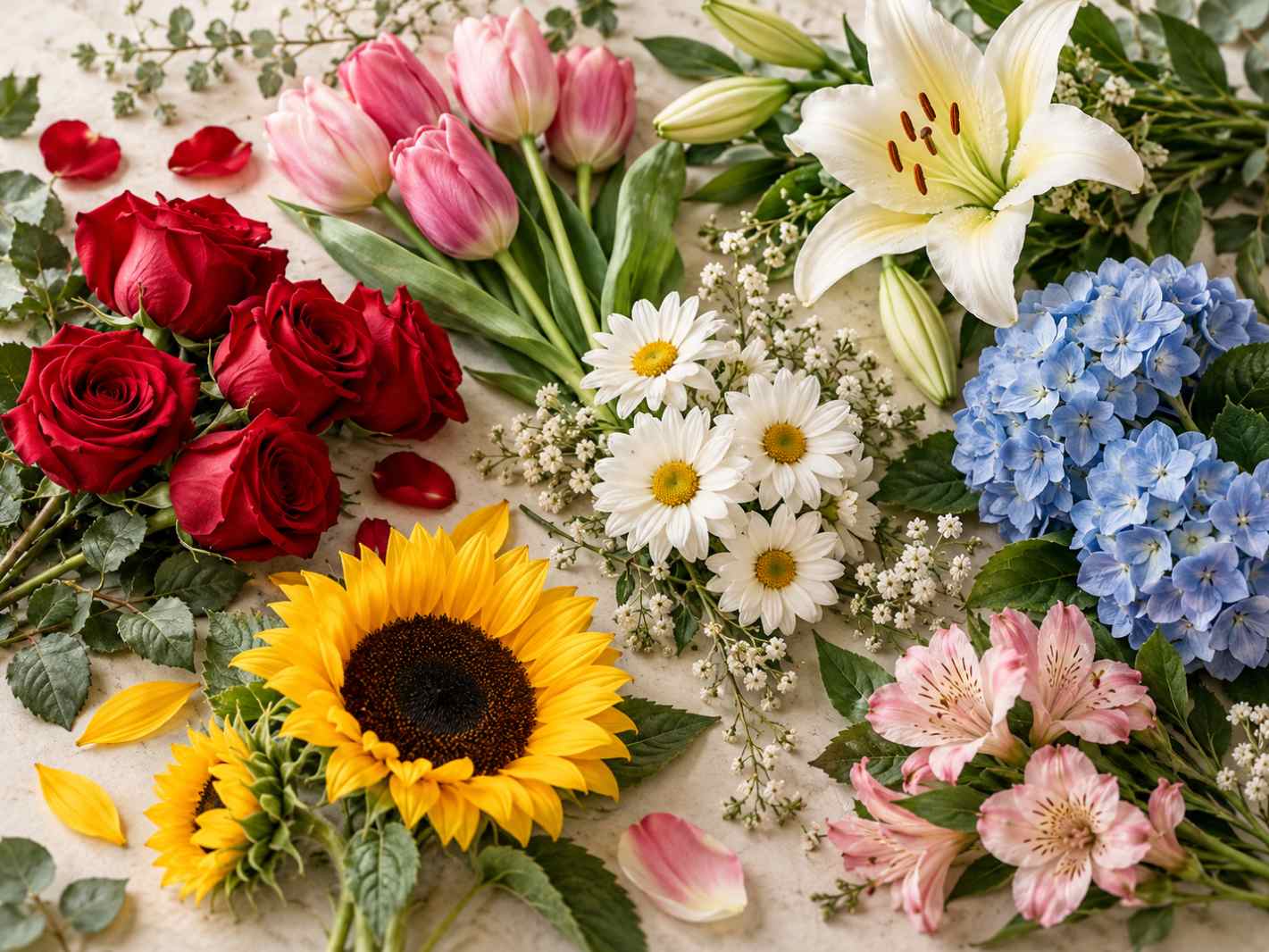
Flowers can express feelings that are sometimes difficult to put into words. A bouquet of red roses may suggest romantic love, while bright sunflowers can bring to mind happiness, warmth, and optimism. Even a simple bunch of white flowers can communicate elegance, sympathy, or a fresh beginning.
For centuries, flowers have been associated with emotions, traditions, and special occasions. Their meanings have influenced everything from romantic gifts and wedding decorations to birthday bouquets and garden design.
However, flower symbolism is not always straightforward. The same flower can represent different things depending on its colour, cultural background, and the occasion on which it is given.
Whether you are choosing a bouquet for someone special, decorating your home, or simply curious about the meanings behind your favourite blooms, this guide explores what different flowers traditionally symbolise and how to choose flowers with a message in mind.
1. Roses: Love, Appreciation, and Romance
Roses are among the most recognisable flowers in the world, and their symbolism is closely connected with love, affection, and admiration.
Although red roses are particularly associated with romance, different rose colours can communicate different sentiments.
Red roses: Romantic love
Red roses are a classic symbol of romantic love and passion. They are popular choices for Valentine’s Day, anniversaries, and other occasions when someone wants to express deep affection.
A bouquet of red roses can feel traditional and dramatic, making it a suitable choice for a romantic partner.
Pink roses: Appreciation and admiration
Pink roses are often associated with gratitude, admiration, and gentler forms of affection. They can make thoughtful gifts for friends, family members, and people you appreciate.
Their softer colours also work beautifully in elegant home arrangements.
Yellow roses: Friendship and happiness
Yellow roses are commonly associated with friendship, warmth, and cheerful feelings. Their bright colour makes them suitable for birthdays, congratulations, and informal celebrations.
They can also bring a sunny touch to a kitchen table or living room.
White roses: Sincerity and new beginnings
White roses are often associated with sincerity, elegance, and new beginnings. They are popular in weddings and other occasions where a clean, understated appearance is desirable.
Orange roses: Enthusiasm and energy
Orange roses are commonly linked with enthusiasm, fascination, and excitement. Their warm colour makes them a striking choice for vibrant bouquets.
When choosing roses, consider both their traditional meaning and the recipient’s personal preferences. A colour that reminds someone of a favourite place or a special memory may be more meaningful than symbolism alone.
2. Tulips: Affection, Happiness, and Fresh Starts
Tulips are known for their simple shapes, smooth petals, and wide range of colours. They are popular in spring arrangements and work well in both minimalist and colourful bouquets.
In many modern floral traditions, tulips are associated with affection, happiness, and new beginnings.
Red tulips are often linked with romantic love, while yellow tulips are commonly associated with cheerfulness and positive feelings. Pink tulips can communicate affection and appreciation, and white tulips may suggest forgiveness or a fresh start.
One reason tulips make such versatile gifts is that they can suit many different relationships. A small bunch of pink tulips can be a thoughtful birthday present for a friend, while red tulips may be appropriate for a romantic occasion.
They are also attractive choices for home decorating. A simple vase of tulips on a dining table can introduce colour without making the room feel overly formal.
If you enjoy arranging flowers yourself, tulips are worth considering because they look beautiful in both single-colour bunches and mixed seasonal arrangements.
Their stems continue to grow after cutting, so give them enough space in the vase and expect the arrangement to change shape over time.
3. Sunflowers: Happiness, Loyalty, and Positivity
With their bright yellow petals and distinctive flower heads, sunflowers are difficult to overlook.
They are widely associated with happiness, warmth, positivity, and admiration. Their sunny appearance makes them popular gifts for friends, family members, and anyone who enjoys cheerful, colourful flowers.
Sunflowers can be particularly suitable for birthdays, congratulations, and celebrations of personal achievements.
They also have an interesting place in cultural symbolism. Their tendency to turn towards sunlight has made them a familiar symbol of optimism and seeking the positive.
In floral arrangements, sunflowers work well as focal flowers because their size and colour naturally draw attention. Pairing them with white daisies, smaller yellow blooms, or fresh greenery can create a relaxed, garden-inspired bouquet.
They are equally attractive when displayed on their own in a simple glass vase.
If you are looking for a gift that feels friendly rather than romantic, sunflowers can be an excellent choice. Their meaning is generally cheerful and welcoming, making them suitable for many occasions.
4. Lilies: Elegance, Renewal, and Remembrance
Lilies are admired for their striking shapes, elegant petals, and, in some varieties, distinctive fragrance.
Their symbolism varies according to the variety and cultural context, but they are often associated with purity, renewal, sympathy, and remembrance.
White lilies are frequently used in weddings and sympathy arrangements because of their associations with purity, peace, and remembrance.
Pink lilies can convey admiration, prosperity, and affection, depending on the tradition.
Orange lilies are often associated with confidence, energy, and warmth.
Yellow lilies may suggest happiness and gratitude in some floral traditions.
Because lilies have such a prominent appearance, they can become the main feature of a bouquet. A few stems in a tall vase can create an elegant display without requiring many additional flowers.
However, lilies have a strong fragrance in some varieties, which may not suit everyone. More importantly, true lilies are extremely toxic to cats, and exposure to even small amounts of pollen or plant material can cause life-threatening poisoning.
If the recipient has a cat, choose a different flower rather than taking the risk.
5. Carnations: Affection, Gratitude, and Lasting Admiration
Carnations are sometimes overlooked in favour of more expensive flowers, but they have a long history in floral traditions and offer excellent versatility.
They are available in many colours, have ruffled petals, and can remain attractive for a relatively long time when cared for properly.
Pink carnations are traditionally associated with gratitude and affection. Red carnations may symbolise admiration or deep love, while white carnations are often linked with purity and remembrance.
Yellow carnations have sometimes been associated with disappointment or rejection in traditional flower symbolism, although interpretations vary across cultures.
Carnations are useful for occasions when you want a colourful bouquet without spending too much. Their layered petals create volume, allowing a relatively small number of stems to produce a full-looking arrangement.
They also combine well with roses, chrysanthemums, and seasonal greenery.
For home decorating, carnations can be used in compact arrangements on bedside tables, kitchen counters, or dining tables. Choosing one or two complementary colours can create a coordinated appearance without the need for elaborate styling.
Their affordability and variety make them a practical option for birthdays, thank-you gifts, and everyday floral displays.
6. Peonies: Romance, Prosperity, and Good Fortune
Peonies are known for their large, layered blooms and soft, rounded shapes. Their full appearance gives them a luxurious quality that makes them popular in wedding bouquets, romantic arrangements, and special-occasion gifts.
In Chinese cultural traditions, peonies have strong associations with prosperity, honour, and good fortune. They are also widely linked with romance and a happy relationship in various floral traditions.
Pink peonies are particularly popular for romantic and celebratory arrangements, while white varieties offer a softer, more understated look.
Because their blooms are naturally generous, peonies can make an arrangement feel abundant even when only a few stems are used.
They are often chosen for anniversaries, engagements, weddings, and birthdays when someone wants to give a bouquet that feels special.
However, peonies can be seasonal and relatively expensive compared with some everyday flowers. Availability depends on the growing region and time of year.
If peonies are unavailable or outside your budget, garden roses or other full-petalled flowers can provide a similar romantic effect.
7. Orchids: Beauty, Strength, and Refinement
Orchids have an elegant appearance that makes them popular in both floral gifts and home decoration.
They are often associated with beauty, refinement, luxury, and strength. In some cultural traditions, orchids also symbolise fertility, prosperity, and good fortune.
Their symbolism can vary considerably between cultures, so it is useful to consider the recipient’s background and the occasion when choosing an orchid as a gift.
Orchids are especially suitable for people who appreciate understated, contemporary interiors. A flowering orchid in a simple ceramic pot can complement a living room, bedroom, or home office.
Unlike a bouquet of cut flowers, a potted orchid may continue growing and flowering with appropriate care. This makes it a possible choice for someone who enjoys looking after plants.
However, orchids have specific growing requirements, and not every recipient will want the responsibility of maintaining one.
If you choose a potted orchid, consider whether the person has suitable light conditions and enjoys caring for indoor plants.
For a cut-flower arrangement, certain orchid varieties can create a sophisticated display, particularly when paired with simple greenery.
8. Daisies: Innocence, Simplicity, and Cheerfulness
Daisies have a fresh, uncomplicated appearance that makes them easy to incorporate into casual bouquets and garden-inspired arrangements.
They are commonly associated with innocence, purity, cheerfulness, and new beginnings.
Their simple shape and bright centres can make an arrangement feel relaxed rather than formal. This is one reason daisies are popular for birthdays, friendship gifts, and informal celebrations.
White daisies paired with yellow flowers can create a bright, sunny arrangement, while colourful gerbera daisies offer a more modern and expressive alternative.
Daisies are also useful for people who prefer natural-looking bouquets rather than arrangements dominated by large, elaborate blooms.
At home, they can be displayed in a clear glass vase or a simple ceramic container. Their informal appearance works well with natural materials such as wood, linen, and woven accessories.
If you are making a bouquet yourself, combining daisies with a few larger focal flowers can create a balanced arrangement without requiring specialist floristry skills.
Their symbolism is generally light-hearted, making them an appealing option when you want to send a cheerful message.
9. Hydrangeas: Gratitude, Abundance, and Emotion
Hydrangeas are known for their large clusters of small flowers, which create a full, rounded appearance.
Their symbolism varies between cultures and traditions. They are often associated with gratitude, abundance, heartfelt emotion, and appreciation. In some contexts, they may also carry meanings related to apology or vanity.
Because of these differing interpretations, hydrangeas are best chosen with the occasion and recipient in mind rather than relying on one universal meaning.
Their large flower heads make them useful for creating generous-looking arrangements. A few stems can fill a vase beautifully, particularly when paired with greenery or smaller supporting flowers.
Blue hydrangeas are often associated with calmness and gratitude in modern floral gifting, while pink varieties can create a warmer, more romantic appearance. White hydrangeas are popular in elegant and understated arrangements.
Hydrangeas can also be used in home decorating, especially when you want a bouquet that creates a noticeable visual feature.
Keep in mind that their large flower heads can lose moisture quickly. Proper stem preparation and regular water checks are important if you want to maintain their appearance.
10. Irises: Wisdom, Hope, and Courage
Irises have distinctive petals and an elegant shape that makes them stand out from more rounded flowers.
In various traditions, irises are associated with wisdom, hope, courage, and faith. Their name is also connected with the Greek word for rainbow, reflecting the range of colours found across different iris varieties.
Purple irises are often linked with wisdom and admiration, while blue varieties may suggest hope and trust. White irises can convey purity or sincerity in some contexts.
Their striking appearance makes them suitable for arrangements that need a little structure and visual interest.
Irises can be a thoughtful choice for congratulations, personal milestones, or gifts for someone who appreciates unusual flowers.
They also work well in seasonal displays, especially when combined with simpler flowers that allow their distinctive shape to stand out.
If you are arranging irises at home, avoid overcrowding them with too many other large blooms. A few carefully positioned stems can create a more balanced and elegant result.
11. Lavender: Calmness, Devotion, and Serenity
Lavender is recognised for its delicate purple flowers and distinctive fragrance.
It is commonly associated with calmness, serenity, devotion, and relaxation. Its fragrance has also made it a popular ingredient in home fragrance products, bath products, and garden designs.
Lavender can be given as a small bouquet, a dried arrangement, or a potted plant for someone who enjoys gardening.
Unlike many large-cut-flower bouquets, lavender often suits a simple, understated presentation. A few stems tied with ribbon can make a thoughtful gift, particularly for someone who prefers natural and rustic styles.
Dried lavender can also be used in decorative arrangements, although its fragrance gradually fades over time.
At home, lavender complements neutral colours, natural wood, linen textiles, and cottage-inspired decor.
If you are buying lavender for someone, consider whether they enjoy its fragrance. Although many people find it pleasant, strong scents are not suitable for everyone.
Lavender is also a useful option for people who prefer gifts that can be displayed in a relaxed, informal way rather than requiring an elaborate vase arrangement.
12. Chrysanthemums: Longevity, Joy, and Respect
Chrysanthemums are popular flowers with a wide variety of shapes, colours, and sizes.
Their symbolism differs considerably between cultures. In some countries, chrysanthemums are associated with longevity, happiness, and good fortune. In other places, certain colours or varieties are strongly linked with remembrance and funerals.
This makes chrysanthemums a good example of why cultural context matters when choosing flowers.
Yellow chrysanthemums may communicate cheerfulness in some traditions, while white varieties can carry different meanings depending on the country and occasion.
Before choosing chrysanthemums for a gift, consider local customs and the recipient’s cultural background.
From a practical perspective, chrysanthemums are versatile and can work well in both mixed bouquets and single-variety arrangements.
Their relatively long vase life can also make them a useful choice for people who want to enjoy fresh flowers at home for longer.
They combine particularly well with roses, carnations, and seasonal greenery.
13. Daffodils: Renewal, Hope, and New Beginnings
Daffodils are among the most recognisable signs of spring. Their bright yellow or white flowers are often associated with renewal, optimism, and the arrival of warmer weather.
They are especially suitable for spring birthdays, congratulations, and gifts intended to celebrate a fresh start.
Daffodils can also carry cultural significance. In Wales, for example, they are a well-known national symbol and are traditionally associated with St David’s Day.
Their cheerful appearance makes them attractive in simple seasonal arrangements, particularly when displayed in a clear vase or a container with a natural finish.
However, daffodils release sap after cutting, and that sap can affect other flowers in a mixed arrangement. They are often conditioned separately before being combined with other varieties, following suitable flower-care guidance.
If you are creating a mixed bouquet, check how daffodils should be prepared rather than immediately placing their freshly cut stems alongside other flowers.
For a straightforward display, a bunch of daffodils on their own can look bright and elegant without requiring additional blooms.
14. Forget-Me-Nots: Remembrance and Lasting Connection
Forget-me-nots are small flowers with delicate blue petals and a bright central area.
Their name has made them a familiar symbol of remembrance, enduring affection, and lasting connection.
They can be particularly meaningful when giving flowers to someone with whom you share a long friendship or an important memory.
Because their blooms are small, forget-me-nots are often better suited to garden planting or delicate arrangements than to large, dramatic bouquets.
They can also be used in cottage-style gardens, where their natural appearance complements other seasonal flowers.
If you want to give a symbolic gift without choosing an expensive bouquet, a small flowering plant may be a thoughtful option.
The meaning behind forget-me-nots is often more important than the size of the display. They are a reminder that a simple gesture can carry considerable emotional significance.
15. How to Choose Flowers Based on Their Meaning
Understanding flower symbolism is useful, but you do not need to memorise the meaning of every variety before buying a bouquet.
A simple approach is to start with the message you want to communicate and choose flowers that suit both the occasion and the recipient.
| Occasion | Flowers to Consider | Traditional Associations |
|---|---|---|
| Romantic anniversary | Red roses, red tulips, peonies | Love, affection, romance |
| Birthday celebration | Sunflowers, gerberas, mixed seasonal flowers | Happiness, positivity, celebration |
| Thank-you gift | Pink roses, carnations, hydrangeas | Appreciation, gratitude |
| New job or achievement | Sunflowers, irises, tulips | Optimism, hope, confidence |
| Wedding or engagement | White roses, peonies, orchids | Elegance, romance, new beginnings |
| Sympathy or remembrance | White lilies, white roses, chrysanthemums | Peace, remembrance, respect |
| Friendship | Yellow roses, daisies, colourful tulips | Cheerfulness, warmth, connection |
| Housewarming | Orchids, tulips, mixed seasonal flowers | Beauty, renewal, good wishes |
These are general suggestions rather than fixed rules. The meaning of a flower can change across cultures, and some varieties are associated with very different occasions in different countries.
If you are uncertain, choose flowers that the recipient likes and include a short message explaining why you selected them.
16. Does Flower Colour Matter as Much as Flower Type?
Flower colour can influence the message of a bouquet, sometimes as much as the variety itself.
For example, red roses are traditionally associated with romantic love, while yellow roses are often linked with friendship and happiness.
However, colour meanings are not universal. White flowers may represent purity or new beginnings in one context and mourning in another.
When choosing flowers, think about three factors.
The occasion: A romantic anniversary may call for a different colour palette from a workplace birthday.
The recipient’s preferences: Someone who loves bright colours may appreciate a vivid mixed bouquet more than a traditional arrangement of white flowers.
The cultural context: If you are giving flowers to someone from a different cultural background, it is worth checking whether particular colours or varieties have special associations.
You can also choose a coordinated colour scheme simply because it suits the recipient’s home or personal style.
A bouquet does not need a complicated symbolic message to be meaningful. Sometimes, selecting someone’s favourite colour is the most thoughtful choice you can make.
17. How to Use Flower Symbolism in Home Decor
Flower symbolism is not limited to gifts. You can also use flowers to create a particular mood in your home.
For example, sunflowers and yellow tulips can introduce a cheerful touch to a kitchen or dining area. White roses and pale hydrangeas can create a softer atmosphere in a living room, while lavender can complement a relaxed bedroom setting.
Consider these simple ideas:
For a welcoming entrance
Place a small arrangement of seasonal flowers on a hallway console. Bright, cheerful blooms can make the space feel inviting.
For a romantic dining table
Use roses or peonies in soft pink and red tones. Keep the arrangement low enough that it does not obstruct conversation.
For a calm living room
Choose white flowers, pale greenery, or lavender-toned blooms in a simple ceramic vase.
For a spring display
Combine daffodils, tulips, or other seasonal flowers in a light-coloured container.
For a thoughtful guest-room arrangement
A few fresh flowers in a small vase can add a welcoming touch without taking up much space.
When decorating with flowers, balance their colour and shape with the surrounding room. A simple arrangement that complements your interior can be more effective than a large display that overwhelms the space.
Final Thoughts
Flowers can communicate affection, gratitude, happiness, remembrance, and many other emotions. From romantic roses and cheerful sunflowers to elegant lilies and delicate forget-me-nots, each variety has its own history of symbolism and cultural associations.
However, there is no universal dictionary that determines exactly what every flower means. Traditions differ, colour meanings change, and personal experiences often matter more than established symbolism.
When choosing flowers for someone else, begin with the occasion and the message you want to convey. Then consider their favourite colours, preferred varieties, and practical needs.
If you are giving flowers as a gift, a short handwritten note can help explain your choice. If you are arranging flowers at home, you can use their colours and traditional associations to create a display that suits the mood you want.
Ultimately, flowers are meaningful not only because of what they traditionally symbolise, but also because of the thought and care behind them. A carefully chosen bloom, whether part of an elaborate bouquet or a simple arrangement in a vase, can be a beautiful way to make an everyday moment feel special.
Add a quick flower-meaning reference chart